Tuesday, August 15, 2006

Jaguarão-RS, uma cidade histórica / Jaguarão, RS a historic city


Linha de casas cuja construção data por volta da metade do século XIX, no centro histórico de Jaguarão. A cidade também fica na fronteira com o Uruguai. Deste lugar, estou a 5 minutos de caminhada da fronteira. / Houses build in the middle of XIX century, in Jaguarão downtown. The city also is located near the Uruguay border. From this place where I took the pic, I was 5 minutes of walking to the border.

Monday, August 07, 2006

Casa solitária / Lonely house

Em algum lugar entre Pelotas-Rio Branco à beira da estrada vi uma casa perdida no meio do nada e um cachorro montando guarda e esperando a vida passar.../ Somewhere between Pelotas and Rio Brando I saw a lonely house in the middle of nothing with a dog waiting for the life goes on...

Thursday, August 03, 2006

Carro Velho / Old Car


Carro Velho / Old Car
Originally uploaded by r0drig0 FL0res.
Havana, Cuba? Não! Isto é o Chui, Brasil. Alguns carros no uruguai são uma atração à parte. Os proprietários têm uma infinita criatividade para mantê-los funcionando tanto tempo. Bom para os mochileiros! Havana, Cuba? No! It´s Chui, in Brazil. Some old cars in Uruguay are good copy to some shots. I wonder how creative their owners are to keep them working so many time. Good for backpackers take this kind of nice shot!

Wednesday, July 26, 2006

Vida na fronteira / Life in the border

Brasil e Uruguai são separados por uma avenida.
Vivendo-se assim, acontecem várias situações inusitadas quanto ao comércio, o idioma e os hábitos culturais da população, os quais para quem é de fora é totalmente estranho.
No comércio, pesos e reais são aceitos sem importar o lado onde se está na fronteira: seja no supermercado, na "carniceria" (açougue) ou no restaurante.
Nas lojas, os atendentes invariavelmente perguntam: "dolares o reales?".
Mas para quem faz a compra no cartão de crédito, não tem jeito: é no dólar mesmo.
O(s) idioma(s) é (são) uma atração à parte.
Português e espanhol misturam-se no ambiente todo tempo. Mesmo no lado brasileiro acontece às vezes de dirigir-se à alguém em português, mas não ser compreendido. Mas tentando espanhol, melhora a comunicação. Na hora da despedida diz-se "gracias" e eles respondem: "de nada".
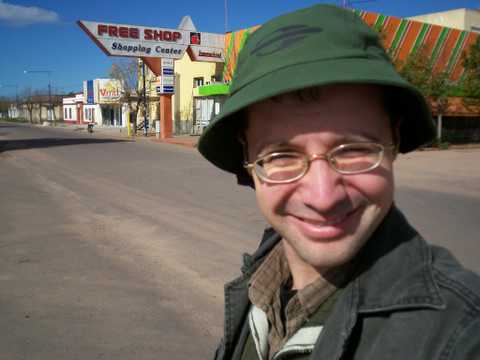
Nos free-shops, as atendentes , bonitas e bem-educadas, dirigem-se ao cliente falando português sem nenhum sotaque e pensa-se: "é brasileira que trabalha no Uruguai". Mas segundos depois atende outra pessoa falando espanhol perfeito e então fica a dúvida...
Na foto sou eu, no final da Avenida Brasil, onde ficam os free-shops. / Brazil and Uruguay are separated by an avenue. Living in this way, happens a lot of picturesque situations concerning to business, cultural habits and language.
When you shopping, both brazilian reais or uruguayan pesos are welcomed. It doesn´t matter the side of the frontier you are.
On the shops, sales assistents always ask: "dolares o reales?".
The language is another interesting thing.
Portuguese and spanish mixes everywhere. Sometimes in the brazilian side who speaks portuguese is not understood. But trying speaking spanish, comunication improves. We say "gracias" before leave and then they answer something in portuguese.
Sales assistents on the shop are very beautiful and polited. They help the clients speaking portuguese, and then, I thought "she is a brazilian who works in Uruguay". But seconds later, she helps another one in perfect spanish. Then, I´m sure where is from...
It´s me on the picture, in the end of Brasil Avenue where the free shops are located.

Saturday, July 22, 2006

A Fronteira / The Border

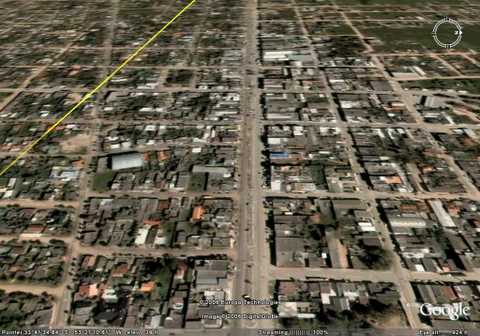
Perspectiva do Google Earth da fronteira do Brasil/Uruguai. Embora a linha amarela à esquerda seja a verdadeira demarcação da fronteira, fisicamente ela não existe. Pelo costume internacional, acabou ficando como faixa de fronteira a avenida que você vê no centro da foto. Do lado esquerdo da avenida está a cidade do Chuy, lado uruguaio. Do lado direito, está a cidade de Chui, no Brasil. É nesta avenida, chamada Avenida Brasil, que se desenvolve o comércio da cidade através de vários free-shops que pode-se comprar artigos eletrônicos, eletrodomésticos, perfumes, bebidas a preços em conta, dependendo do câmbio. Atualmente, com o real forte, milhares de brasileiros cruzam a fronteira, ou melhor, a avenida, para fazer compras. Uma curiosidade: a avenida é composta de duas pistas independentes uma da outra, isto é, em ambos os lados há dois sentidos, o que pode confundir o turista desavisado (foi o meu caso...). / Google Earth perspective of the Brazil/Uruguay border. Although the yellow line in the left is the real frontier, phisically it doesn´t exist. International customs decided the real border is the avenue that you see in the center of the picture. On the left side, it is located the city of Chuy, Uruguay. On the right side, it is located the city of Chui, Brazil. It´s on this avenue where tourists go shopping perfumes, colognes, drinks, household appliances, electronic devices at cheaper prices. Cars in the avenue runs at both directions in the both roads, it can be confusing for the tourist (it happened with me...)

Wednesday, July 19, 2006

Nos confins do Brasil / Near Brazil-Uruguay border

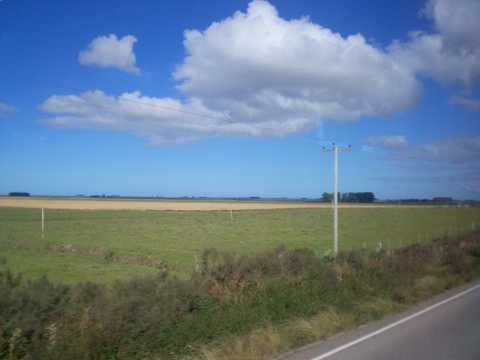
Para chegar ao Chuy (ou Chui, do lado brasileiro) eu peguei o ônibus em Pelotas, às 9:30. A viagem leva cerca de 4 horas. Não espere uma paisagem muito fascinante na viagem, ela é monótona a maior parte do tempo, trata-se de uma paisagem extremamente plana. Na maioria do tempo, você verá fazendas de arroz, como pode-se ver na foto. No meio do caminho, existe a Reserva Ecológica do Taim, mas em virtude da uma severa seca, onde era o banhado que via-se a fauna, há agora apenas campo. / To go to Chuy (or Chui, in the brazilian side of the border), I get the bus in Pelotas at 9:30. The trip takes around 4 hours. Don´t expect a exciting views during the trip, since it is a dull landscape in a extremely plain terrain. Most of the time you will see rice farms, as you see in the picture. In the middle of the way, there is an Ecological Reserve, called "Taim", but due to a severe drought were shoud be swamps, there just lawn.

Sunday, July 16, 2006

Passeio pelo Chuy-Uruguai / Trip to Chuy, Uruguay

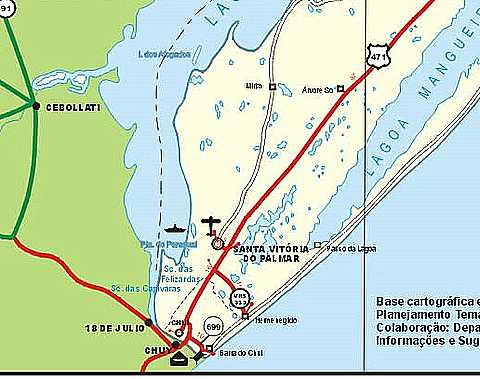
Na próxima série de posts vou mostrar algumas fotos de uma rápida trip que fiz ao Chuy, no Uruguai. No lado brasileiro, fica a cidade homônima: Chui (com 'i'). É o ponto mais meridional do país, daí a famosa expressão: "do Oiapoque ao Chui". / In the next posts I will show some pics from a quick trip to Chuy, Uruguay. In the brazilian side of the border there is a city with
almost the same name: Chui (with 'i'). Chui is the southern point in the brazilian territory. There´s a saying in Brazil wich we says: "From Oiapoque (the northern point of the territory) to Chui", when we want to say about something that covers the whole country.

Saturday, July 08, 2006

Onde fiquei / Where I stayed

Fiquei na Pousada das Missões , é um lugar extremamente agradável, tranqüilo, bonito e o pessoal é muito atencioso. Toda decoração é inspirada na arte missioneira: a fonte, os quartos, até mesmo a caixa d´água foi construída seguindo o modelo do antigo observatório que existia na aldeia. É possível ver a foto do satélite no post anterior, ela está à esquerda. Como se vê, ela fica perto das ruínas. I stayed at Pousada das Missões, it´s a very pleasant, peaceful and beautiful place. Every detail was inspired in the missionary art: the font, the rooms even the water reservoir was inspired in the old observatory that was build in the village. It´s possible to see the hostel in the last post, on the left of the picture. The hostel is near from the ruins.

Thursday, July 06, 2006

Visão aérea do sítio arqueológico / Aerial view of the archeological site

Visão de satélite do sítio arqueológico da Igreja de São Miguel do Arcanjo. À esquerda, está a Pousada das Missões, onde eu me hospedei. À direita, está a igreja. Acima da igreja, está o Museu das Missões. Satellite view of the archeological site. On the left, there is the Pousada das Missões Hostel, where I stay. On the right side, you can see the ruins of the church, above the church, you can see the museum.

Tuesday, July 04, 2006

Caminhos felizes / Happy ways

Dica para quem está em forma: alugue uma bicicleta e pedale na RS-536 até o trevo da BR-385! São 32 km, ida e volta, com muitas descidas e subidas. Os freios da bicicleta têm que estar em boas condições, algumas descidas são muito longas e descer sem acionar os freios é muito perigoso. Foi o melhor passeio de bicleta da minha vida. Tip if you are in good shape: rent a bike and ride in the road called RS-536 until it crosses another road the BR-385! It´s 32km the round trip, there´s lots of way up and way down. Brakes of the bike must be in perfect conditions, since some way down are very long and it´s dangerous to ride without using the brakes. It was my best bike ride in my life.

Sunday, July 02, 2006

Fonte Missioneira / Missions font

Fora do sítio arqueológico da Igreja de São Miguel do Arcanjo, em São Miguel das Missões, foi descoberta uma fonte construída pelos guaranis, que eram construídas na periferia das cidades. Fica umas 5 quadras do sítio. É um passeio interessante de bike! There is a font ouside the site where is located the São Miguel do Arcanjo Church. The font is around 5 blocks away. Fonts used to be constructed in the outskirts of the village. It´s a interesting bike trip!

Thursday, June 29, 2006

Arte Missioneira / The art from the missions

Dentro do sítio, há um museu projetado por Lúcio Costa e construído em 1940. Há cerca de 100 estátuas confeccionadas em estilo barroco pelos guaranis. Algumas estátuas tem mais de dois metros de altura. Na foto, alguns exemplos das imagens. There´s a museum inside the archeological site build in 1940, project by Lucio Costa. In the museum, there´s 100 statues build by indians. Some of them has 2 metres of height. Some examples of these statues in the picture.

Tuesday, June 27, 2006

Igreja e gramado / Church and lawn

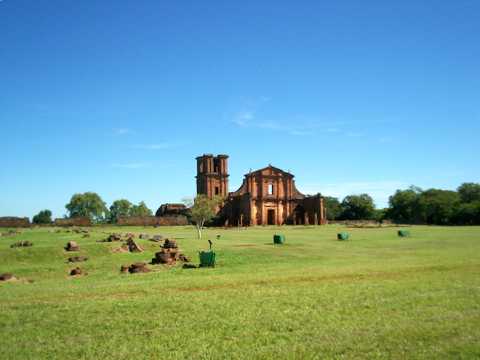
Visão da Igreja de São Miguel do Arcanjo à distância. Tirei esta foto onde fica a arquibancada em que se assiste ao espetáculo chamado "Som e Luz", o qual é uma representação eletrônica da história das Missões na voz dos artistas da Rede Globo. A voz de Fernanda Montenegro é facilmente reconhecível! O show ocorre todas as noites, de domingo a domingo. Distant view of the São Miguel do Arcanjo Church. I took this shot in the bleachers. It´s used to assist the daily show at night wich tells the history of the Missions in the electronic voice of famous brazilain artists.

Sunday, June 25, 2006

Vista do altar / Altar view

Vista dos fundos do interior da Igreja de São Miguel do Arcanjo. Desta vez, as sombras proporcionaram uma bela visão simétrica na fotografia. O local onde eu estava quando tirei a foto ficava o altar da igreja. Back inside view of the São Miguel do Arcanjo Church. This time the shadows allow a beautiful and simetric view of the picture. The place where I shot this picture was the altar of the chuch.

Saturday, June 24, 2006

No cemitério / In the cemetery

Vista da parede lateral da Igreja de São Miguel do Arcanjo. Neste gramado de onde tirei a foto ficava o cemitério. Nos seus fundos, que não aparece na foto, há um limoeiro. Outside view of the São Miguel do Arcanjo Church. In this lawn where I took this picture was the cemetery in the past. In the back of the lawn there is a lemmon plantation.

Friday, June 23, 2006

Parede da Igreja / Wall of the church

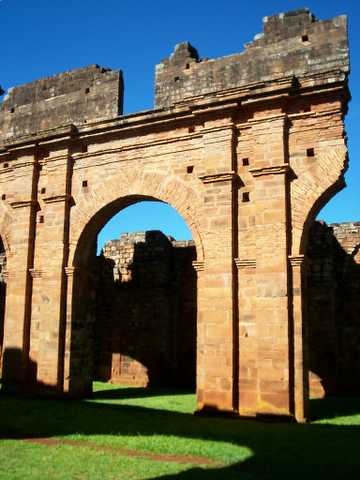
Interior da Igreja de São Miguel do Arcanjo, detalhe da parede que fica à esquerda de quem entrou pela porta principal. Observe as áreas escuras no topo da parede, provavelmente causadas por incêndios. São Miguel do Arcanjo inside. This picture is a wall of the left side considering you come in from the entrance. The darkned colour of the top of the wall was caused by fire happened in the past.

Wednesday, June 21, 2006

Dentro da igreja / Inside the church

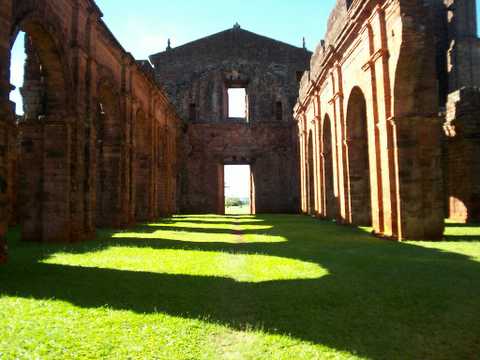
Esta é a sua visão quando você entra na Igreja de São Miguel do Arcanjo. Infelizmente nesta hora do dia as sombras estavam cobrindo boa parte da nave da Igreja. Detalhe que não se vê na foto é que nalgumas partes das paredes, repara-se o pretume causado por incêndios no passado. This is the view when you get into São Miguel Miguel do Arcanjo Church. Unfortunately in this time of the day there was heavy shadows inside. Some parts of the walls are darkened due to fire happened in the past.

Monday, June 19, 2006

A Igreja / The Church

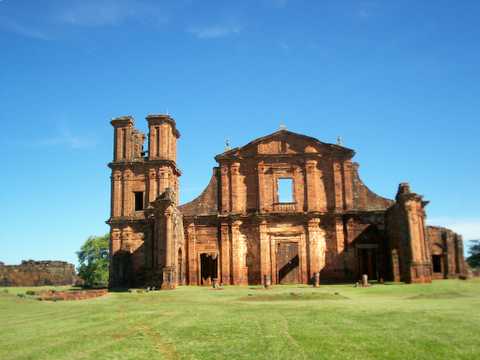
Igreja de São Miguel do Arcanjo, vista de frente. Do lugar de onde tirei a foto ficava a praça. Atrás de mim, estão os vestígios das casas que os guaranis moravam. A Igreja, como em toda a sociedade antiga, era o centro da vida das pessoas. Na Igreja as pessoas eram batizadas, casavam e o padre concedia a extrema-unção. Não havia registro civil, quem administrava a cidade e registrava os atos da vida civil dos moradores era a Igreja. A construção da Igreja, de estilo barroco, foi iniciada pelo arquiteto jesuíta Jean Baptista Primoli, em 1735, e levou dez anos para ser concluída. Incêndios que aconteceram no passado levaram a modificações de sua forma original, diminuindo de tamanho. É contado que ela nunca chegou a ser terminada, porque a torre do lado direito não foi construída, uma vez que as Missões foram abandonadas antes do término da segunda torre. São Miguel do Arcanjo Church front view. I took this shot were was the square of the village. Behind me, is possible to see some stones that in the past was the native´s house. The Church, like any other ancient society, was the center of the people´s life. The construction of the church, projected by jesuit architet Jean Baptista Primoli, began in 1735, and took 10 years to be finished. The church was never finished since the right tower is missing. The Missions was abandoned before.

Sunday, June 18, 2006

A cruz e a Igreja / The cross and the church

A clássica visão da Igreja de São Miguel do Arcanjo sob a sombra da cruz missioneira. No lado esquerdo da Igreja, há os remanescentes da casa dos padres, o colégio e as oficinas. Do lado direito, ficava o cemitério e o cotiguaçu, onde viviam as viúvas e os órfãos. O Museu das Missões, projetado pelo arquiteto Lúcio Costa está atrás desta foto, do lado esquerdo. Classic vision of the São Miguel do Arcanjo Church under the Company of Jesus cross. On the left side of the church, there is ruins of the priests house, the school and the workshops. On the right side of the Church, there is the ruins of the cemetery and "the cotiguaçu" , the place where take care of widows and orphans. Museum of the Missios, projected by architect Lúcio Costa, is behind me, on the left side.

Friday, June 16, 2006

Igreja de São Miguel do Arcanjo / São Miguel do Arcanjo Church

Antes de serem postadas as fotos, vale mostrar a Igreja de São Miguel do Arcanjo, na sua forma original. A Redução de São Miguel do Arcanjo (atual São Miguel das Missões) foi fundada em 1632, logo depois foi abandonada em virtude dos constantes ataques dos bandeirantes paulistas. Persistindo, houve retorno dos guaranis e jesuítas em 1687, vindo a iniciar a construção do novo povoado em sua localização definitiva. São Miguel das Missões se desenvolveu ao redor dos vestígios da Igreja de São Miguel do Arcanjo. I´d like to show firstly São Miguel do Arcanjo Church in its original architeture. São Miguel do Arcanjo Reduction (today São Miguel das Missões) was founded in 1632. After that was abandoned due to settlers constant attacks. However, indians and Jesuits Priests returned in 1687, they began to build the definitive of the new village. São Miguel das Missões developed around the ruins of the Church of São Miguedl do Arcanjo.